CURRENT ISSUE
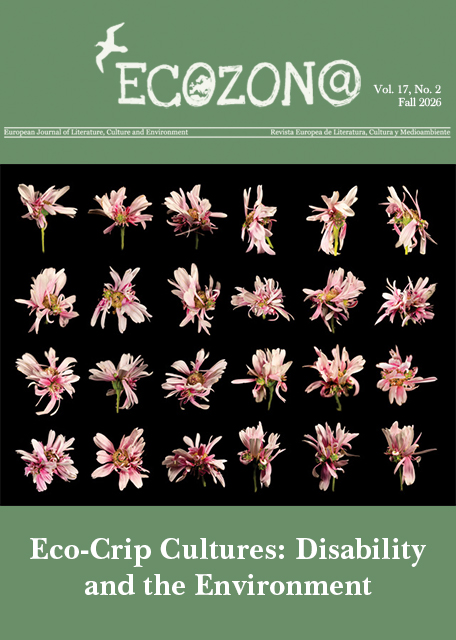

"Eco-crip Cultures: Disability and the Environment"
Co-guest editors: Shanna Lino (York University, Canada)
Maryanne L. Leone (Assumption University, USA)
This special issue explores the intersection of ecology and disability. Recognizing the materiality of both human and more-than-human bodies, we invite articles that consider the possibilities afforded by eco-crip theory to examine the marginalizing cultures of normalization, ableism, and speciesism and to positively value wide-ranging understandings, experiences, and contexts of embodied disability and environment.
Eco-crip literature, film, art, and criticism interrogate culturally situated power structures that appraise sentient and non-sentient beings/forms/entities as deficient and that cement devaluation and exploitation through institutionalized, pathologized systems. These approaches acknowledge that nonhuman tropes have long been employed to derogate people with disabilities and thus deploy critical strategies from the fields of disability studies and the environmental humanities that together argue for non-hierarchical appraisals of differing abilities and of embodiment along with an affirmation of interdependence.
Crip theory deepens the critique of homogenization to defiantly salvage and resituate the derogatory term that it reappropriates. The merger of crip theory with ecocriticism expands the assertion of the material intersectionality of race, gender, and sexuality to also engage with ecology, thus exploring the potential for mutually beneficial existences of disabled bodies and communities with the natural environment.
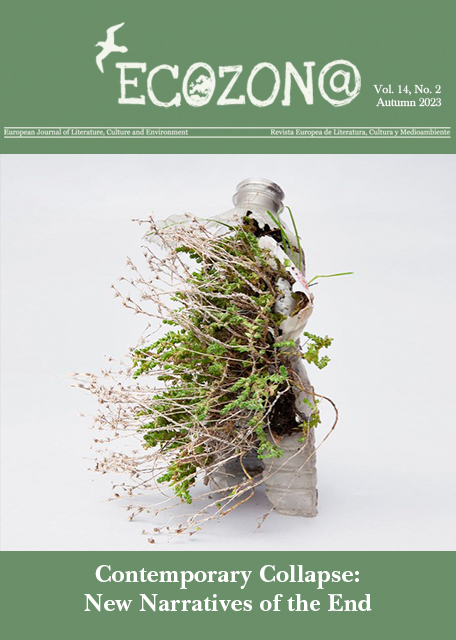
Ecozon@ vol 14, no. 2 features a special section on the “Contemporary Collapse: New Narratives of the End,” introduced and edited by Sara Bédard-Goulet and Christophe Premat. The seven English-language essays shift the focus from “Western” and anthropocentric narratives of collapse to encompass alternative visions such as circular time and indigenous perspectives. The general section includes five essays, four in English and one in Spanish, that also range across continents and feature provocative variations of non-human and bodily entanglements.
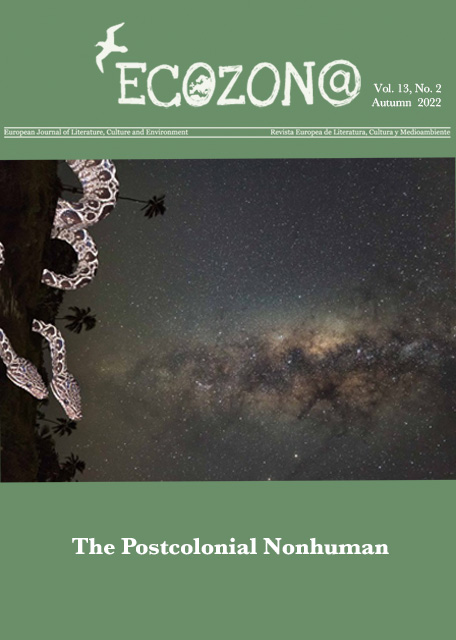
13.2: Ecozon@ vol. 13, no. 2 features a special section the “Postcolonial Nonhuman,” introduced and edited by “Erin James, Cajetan Iheka, and Juan Ignacio Oliva. The six essays address a wide range of postcolonial environments with a focus on the devastation wreaked by colonialism on both human and nonhuman lives entangled together. The general section includes essays on the postcolonial, posthuman, and nonhuman voices from trees and fungi to extractivism in Miyazaki’s animated films.
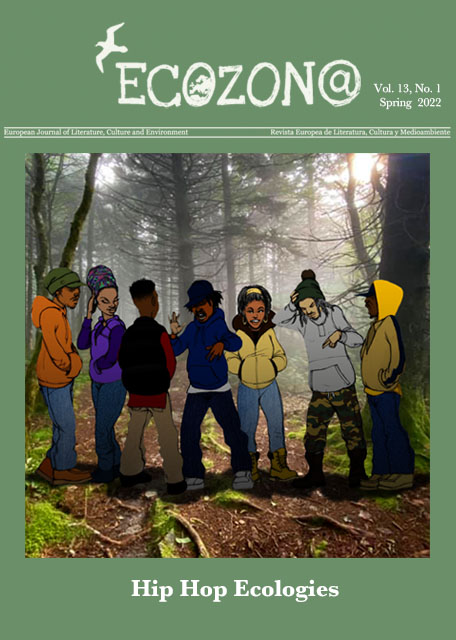
Ecozon@ vol. 13, no. 1 features a special section on “Hip Hop Ecologies,” introduced and guest-edited by Timo Müller and Alain-Philippe Durand. These English-language essays range from Alaskan Indigenous Hip Hop, built environments, and eco hip hop activism. The general section includes two urban-focused essays on cli-fi and Black Metal, and two rural-focused essays on Ireland and China.
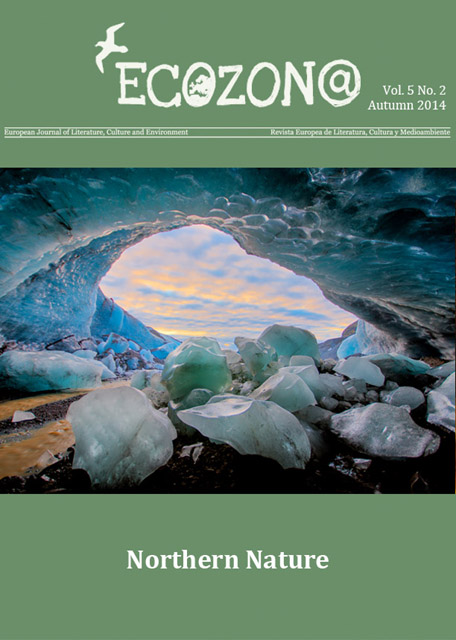
This issue focuses on the North, both as perceived by visitors and as experienced by Arctic peoples, particularly in the face of current climatic, economic and political challenges. This section is complemented by a photograph series and creative writing on the North.
CURRENT ISSUE


PUBLISHED BY:

SPONSORED BY: