CURRENT ISSUE
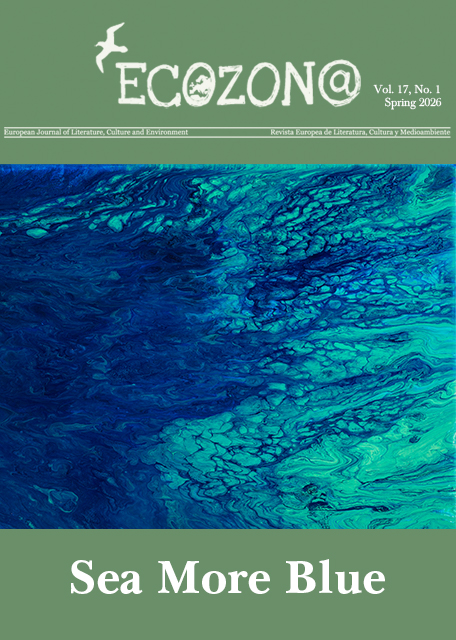

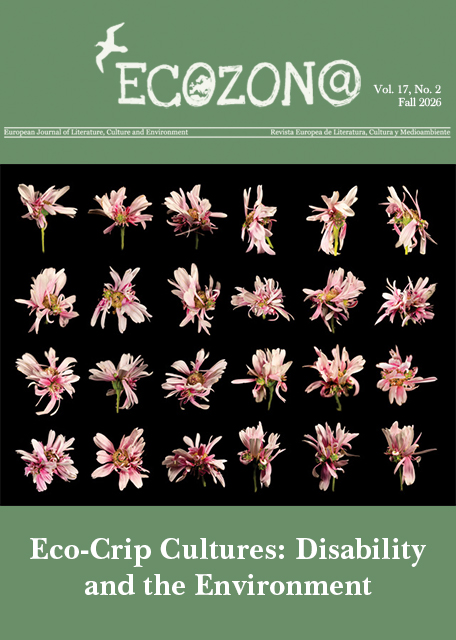
"Eco-crip Cultures: Disability and the Environment"
Co-guest editors: Shanna Lino (York University, Canada)
Maryanne L. Leone (Assumption University, USA)
This special issue explores the intersection of ecology and disability. Recognizing the materiality of both human and more-than-human bodies, we invite articles that consider the possibilities afforded by eco-crip theory to examine the marginalizing cultures of normalization, ableism, and speciesism and to positively value wide-ranging understandings, experiences, and contexts of embodied disability and environment.
Eco-crip literature, film, art, and criticism interrogate culturally situated power structures that appraise sentient and non-sentient beings/forms/entities as deficient and that cement devaluation and exploitation through institutionalized, pathologized systems. These approaches acknowledge that nonhuman tropes have long been employed to derogate people with disabilities and thus deploy critical strategies from the fields of disability studies and the environmental humanities that together argue for non-hierarchical appraisals of differing abilities and of embodiment along with an affirmation of interdependence.
Crip theory deepens the critique of homogenization to defiantly salvage and resituate the derogatory term that it reappropriates. The merger of crip theory with ecocriticism expands the assertion of the material intersectionality of race, gender, and sexuality to also engage with ecology, thus exploring the potential for mutually beneficial existences of disabled bodies and communities with the natural environment.
CURRENT ISSUE


PUBLISHED BY:

SPONSORED BY: